
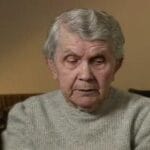
Blima Friedman (Poland), z"l
I was born on September 15, 1907, in Warsaw, Poland. We lived on Krochmalna Street, across from Janusz Korczak’s orphanage. My father, Jakov Szturman, was a tailor in Warsaw. My mother, Gitl Polick, passed away when I was young. I was the third of six children. Four of my brothers and sisters died rather young. Two died before World War I started, and I don’t remember when the other two died. This left only my older brother Mordechai and me.
When my sister and I went to pre-school, our father would walk with us and come to pick us up. There were rumors that gypsies would snatch children, and we were both beautiful girls. My oldest brother was a very gifted child, and Janusz Korczak would come to our house and take him to summer camp. My brother died early in life.
During World War I, and after my mother passed away, my father decided to take us out of Warsaw to his mother’s home. The Germans captured us in a town whose name I can’t remember and put us in a jail that was full of rats. My father told a German officer that we were going to his mother’s house in Tyszowce. The officer told us we weren’t allowed to go there, and that we’d have to return to Warsaw. After we were released from jail, instead of returning to Warsaw, my father asked a Jewish group to help him, and they lent him a horse and buggy to drive us to the city of Lublin, where we had family. From there we went to Zamos. We eventually made it to my grandmother’s house in Tyszowce. When people in the area found out my father was a Warsaw tailor, he got a lot of work from them. Even a Protestant minister came to have his clothing tailored. After World War I, my father returned alone to Warsaw to see what had happened there. When he came back, all of us went back with him to Warsaw. My father then remarried my mother’s sister, Rezza Polick, and they had two sons: Zelig, who died in the Warsaw Ghetto in 1942, and Aron, who died in a concentration camp in 1940.
When I finished school, I wanted to go on to a specialized school. We had a relative who was a manicurist, and she said I could make good money doing that. So I became a manicurist, which I became fairly famous for. A doctor, one of my clients, asked me why I didn’t also do pedicures, so I started doing that as well.
I married Avram Leib Milsztajn in 1932, and we lived with my father. My husband, along with a friend, eventually opened a wholesale meat business. My first child, a boy, died just after he was born. After sometime, my daughter Gita was born. I used to call her Gutka as a nickname. Much later she would change her name to Wanda, but that’s her story. My father loved me and my little daughter very much. Sadly, he died of cancer in 1938.[1]
By then there had been a lot of talk of war, and in September 1939, Germany invaded Poland. They didn’t invade Warsaw initially, and when the German airplanes first appeared over the city we thought they were part of the Polish air force. During that time, I was on duty every night from midnight to 2 a.m. with one other person. Our job was to ensure people went into basements when German airplanes were over Warsaw. Every apartment building was set up this way, with people standing guard for the same reason.
When we went into the basements, my daughter would cry because she was hungry and there was no food or even any bread. There was also a shortage of water because the Germans had bombed the water pipes. Bombs hit one section of our building and a woman was killed.
Four weeks after the invasion of Poland, the Germans finally entered Warsaw, they took men to clean the streets and fix the trams (streetcars) that had been turned over. They gave flour to bakeries to bake bread because everyone was hungry. One day, when I went to the bakery, the line was so long that I thought I wouldn’t get any bread. So I picked up my daughter and walked to the beginning of the line, where there was an SS guard watching people. He gave me one loaf of bread and another to my daughter. Everyone watching was surprised. Also standing in the line was a woman from our building who always called me “that Jew woman.” When she saw me with the bread, she said, “Look at that Jew woman. She has two loaves of bread. By the time it’s my turn there won’t be any bread left.” I gave her one of our loaves. She didn’t know what to say.
We also needed water, and though they opened the street faucets, people still had to stand in line and wait their turn to be able to fill their basin or bucket.
My husband and his brother, along with many other men, decided to go to Bialystok, a city in Poland that was under Russian control at that time. I didn’t want to go because I knew that Russia was a very cold country, and I had a small child to care for. My sister-in-law went to Bialystok to be with her husband, my husband’s brother, but in 1940 she returned because she had an apartment in Warsaw. By then, the Germans had already created the Warsaw Ghetto.
On Yom Kippur in 1940, we went to synagogue, and when we came out there were posters all over announcing that the Germans were creating the ghetto. We needed to move there, and I tried to go to Wronia Street, which was going to be a part of the ghetto. But when the Germans decided that Wronia Street wouldn’t be part of the ghetto, we had to return to our home. Eventually, I found a place on Nowolipki Street where a single woman was living, and we exchanged apartments.
Soon after, many of the men who had gone to Bialystok returned to the Warsaw Ghetto. One of the men who returned told me that the Germans had caught my husband on his way back to Warsaw and killed him. My brother-in-law survived by going to Russia.
Somehow my husband’s mother, Rose Milsztajn, who lived in Brooklyn NY, was able to send some money to us through a bank. The bank that the money was sent to was on the Aryan side, so we got dressed in some very elegant clothes and jumped on a tram that went through the streets of the ghetto. At first none of the bank tellers could figure out how these two Jews got out of the ghetto. I figured we’d either starve to death or get shot, so knowing my options, I wasn’t really afraid. I told my daughter to make sure she survived, because she had a grandmother in the United States. We returned to the ghetto the same way we left, but this time with our money. I decided to use some of the money to have good shoes made for my daughter and me to get us through cold winter.
When we left our apartment for the ghetto, our building caretaker told me we could stay with him and his wife, but we decided to leave. It was December when I went to the gates of the ghetto with my daughter. There was a German soldier with a gun, a Polish and Jewish policemen both with rubber truncheons (a type of club) at the gates. Because we were always nicely dressed, I decided to try and tell them that I wanted to go to the Aryan side to get potatoes since I had coupons. We had to wait a long time, and my daughter began to cry because it was very cold. The Jewish and Polish policemen said that the German was a good person, so I told my daughter to cry even louder. The German soldier asked why my daughter was crying and I told him it was because she was cold and we wanted to go to the Polish side for potatoes. He actually let us go.
We returned to our old building and stayed overnight with our caretaker. I needed money to buy food. In the morning, he told me not to go to the ghetto, but to stay with them. It was just before Christmas, and the caretaker and his wife told me to leave my daughter with them so I could do manicures for my previous clients. We stayed with them for a couple of weeks, then went back to the ghetto.
They were only giving people in the ghetto one-fourth of a loaf of bread for two days, and one frozen rutabaga, which no one could eat. When you got your bread, you needed to hide it under your coat because young boys would take it from you and throw it into sewage so you wouldn’t want it. They would still eat it. I would give my daughter a small piece of bread, take a little for myself, and hide the rest.
I needed food and the only way to get it was to get out of the ghetto. One way to get out of the ghetto was through the basements. Some of the buildings were bombed, so you could go from one side to the other through the basement. You could also go through the sewage system or through the Jewish cemetery on Gensia Street, because the other side of the cemetery was the Catholic portion, and it was not in the ghetto. Anytime I left, I took my daughter with me.
One time, while we were standing near a headstone in the cemetery, my daughter said she had to go to the bathroom. I told her to go near another headstone to do it. A German soldier spotted us and came over to ask what we were doing. I said that my daughter had to go to the bathroom. Luckily, he left us. The Germans patrolled the cemeteries all of the time.
We would go out of the ghetto and stay on the Polish side for two or three days, sleeping wherever we could, mostly in our old caretaker’s apartment. Eventually, someone saw me go to the caretaker’s place, and said if I returned they’d turn me in for a reward. So I couldn’t go there anymore. We sometimes stayed with my clients, and once we went to a woman who was our neighbor, who let us sleep on her kitchen floor. Her son came home and saw us and started screaming at her for allowing us to stay. Needless to say, we couldn’t stay there anymore. After that, we returned to the ghetto.
When we were going in and out of the ghetto, I had to keep the Jewish armband I was forced to wear. I would cover it with shawls, or just take it off so I didn’t advertise that I was Jewish. If they had caught me without the star, the punishment would have been immediate execution.
The next time we left the ghetto, I decided that we wouldn’t go back. We slept under stairs and in basements, and one day, as we were walking, the woman from my old building who called me “that Jew woman” saw us. She asked us what we were doing there, and I told her we needed somewhere to stay. You never knew who was your friend or enemy, because they could take you to the police station where you got shot and they got paid. But she told me to follow her.
She took us to the cemetery, where she had an office because she was the person who took orders for headstones. We stayed there for a few weeks, and every morning she would bring food and share it with us. During the day, we had heat from a little stove, but at night we were freezing.
After some time passed, I found a place for us to stay with a woman I knew and her son, who lived across from a convent that was responsible for saving many Jews. She also rented a bed to another man, who didn’t know we were Jewish. When we stayed with her, I worked in a restaurant that one of my clients owned. Sometimes, my younger brother would leave the ghetto under German guard with groups of men in work parties, and we would go to the gate of the ghetto to try to sneak him some food. But after a while, we stopped seeing him. I never saw him again and to this day I don’t know what happened to him.
I hurt my finger at work one day, and gangrene soon set in. I had to return to the ghetto to see a doctor, who performed surgery to take off a part of my finger. Luck was with me as I was able to escape from the ghetto once again.
On Palm Sunday 1943, the first day of Passover, the Warsaw Ghetto uprising began. All this time, while the ghetto was burning, I worked cleaning people’s homes. When I walked the streets of Warsaw, I tried to cover my face to make sure nobody would recognize me. After the Germans burned the ghetto, they gave orders that if a Jew was found hiding, everyone else in that building would also be shot.
Everything was so crazy, I wasn’t sure where we would end up. There was a man in the building we were hiding who was willing to take the bounty money for giving up Jews. One day his wife saw us. She knew we were Jewish, so we decided that we had to leave in case she told her husband.
Someone suggested we go to the convent, but I didn’t want to go there because we would have had to convert to Christianity. I decided to send my daughter to see a woman who lived one floor above the person who owned the restaurant where I worked. My daughter went, and the woman told her to go back and bring me with her. She said we could live with her because she didn’t want to live alone during these uncertain times. She didn’t know that we were Jewish.
One day, the woman’s brother brought a man to stay in the same apartment. My daughter came to me later and said that she heard the man counting in Yiddish.[2] At first I didn’t believe her, but she was sure of what she was saying, that he was counting in Yiddish. I finally went to him and told him he can’t stay here. When he asked why, I told him, “Because you’re Jewish, and so am I.” He was stunned, because I was speaking to him in perfect Polish.
When my daughter saw children playing, I had to keep her away from them so that no one knew we were Jewish. I worked and made some money, and we had it good outside the ghetto. We could wash ourselves and our clothes. One day, at work, someone told me I should leave because something bad was about to happen. That was the day the Polish uprising began. The woman we lived with couldn’t come home for two days because of the uprising. She was a cook for a family and just stayed with them.
As I walked home, there were many Germans with guns and lots of shooting. I had to walk close to the buildings to get home. My daughter and I sat in a basement for a number of days. When the Germans came back to the city, they took all the men out of hiding and killed them. They came to our building on the seventh day, which was the day they were ordered to no longer shoot civilians. The Germans threw a hand grenade down the steps, yelling at anyone in the basement to get out. I told my daughter we couldn’t leave, because we didn’t have identification papers. A few minutes later, a man came to tell us in Polish to leave because the Germans were about to burn the building. My daughter kicked at the door until it opened, and we left. I didn’t want to leave because we were told the Germans were swinging children by their legs and bashing their heads against the buildings. As we left, some of the buildings on both sides of the street were on fire and there were dead bodies strewn along the sidewalks.
At one point, there was a German patrol in the middle of the street checking papers, which we didn’t have. My daughter started jumping up and down saying she had to go to the bathroom. A German soldier told us to go into one of the nearby buildings and we managed to get around the patrol. We kept walking with all the people who’d had their papers checked and were put into a big church. In the church, I saw people from our old neighborhood, but they didn’t say anything about us being Jewish. There was only one German, actually half German and half Polish, in the church, and he was mad because he wanted to go home and couldn’t because of the uprising in Warsaw. He was commonly known as the Volksdeutsche. If anyone came close to him he’d hit them with the butt of his gun.
The Volksdeutsche received an order from his superiors to move people, so he asked if anyone wanted to go to some new place today. He said if they wanted to leave for this new place today they could, but they didn’t have to go today if they didn’t want to. I didn’t know what to do because we didn’t know where they were taking us and I didn’t want them to take my daughter. The woman we’d been staying with was there as well, but she’d been wounded and couldn’t go anywhere. Each time I looked, more and more people had left the church, so I sent my daughter to ask if we should go as well. The Volksdeutsche patted her on her head and told her we should leave right away, because today the march would be slow and the following days it would be worse. I went and told him that the big gate to the church was closed and then he came and he opened it for us. We were able to leave, not knowing where it was we were going.
It was the first of August, and hot, but we had our winter coats over our arms. We walked until we made it to a small town called Piastow, where there was a rubber factory. There were lots of German and Polish people on the streets asking what was going on. One of the Poles, a woman, told me she wanted to take my daughter to her house. I said, “What about me? Am I a dog?” The woman told me that if I could get around the line of people watching, she would take me in as well. The people in the line made room for us to pass and we went into the factory office. Inside, they asked me what was going on in Warsaw, but since I didn’t know who they were I just said that the Poles in the city had taken part in an uprising.
While we were in the office, the woman who promised to take us in, disappeared. A German officer came and asked us if we had somewhere to go and I told him about the woman just as she was returning. The German didn’t want us to go through the factory’s front door, so he took us all the way to the back of the factory and let us out a door that was almost where the woman lived.
When we went to her home, we had to wait outside because the woman’s sister had the key to her room. As we waited, a Ukrainian on a big horse rode up and asked if we knew of any bandits from Warsaw that were in the area. We told him no, and he left.
It turned out that when we left the church, we were supposed to have gone to the village of Pruszkow, where there was a transition camp. From there, the Germans were sending people to various concentration camps.
Half of the rubber factory in Piastow had been converted to a hospital for the wounded. My daughter would go to the hospital and bring food back for us. Then she said that she wanted to sell cigarettes at the hospital, so we made a little box with a string around the neck so she could keep the cigarettes in it.
One day, a German tank battalion came into the town. They were looking for people to peel potatoes, so I went to work for them in their kitchen. A German named Herman told me one day to wash a very big and dirty pot, so I cleaned it so good that it shined. When all the women and I were eating he told me to make sure my daughter came to eat as well. A Babushka who was living around the corner came and told me her children had nothing to eat.[3] I gave her a few potatoes to hide in her pockets, and told her to come back for more.
One time, a wounded German soldier arrived. For some reason he couldn’t eat black bread, and I had some white bread I’d bought. I told Herman to give him the white bread, and the Germans there were amazed that I’d helped their fellow soldier. Later, they asked me to clean their rooms. Eventually, a high ranking officer asked who was doing such a good job cleaning, and that he wanted that person to clean his room. I did such a good job that the officer gave me a pass that showed I worked for the Germans. Because of that pass, I now had papers I could show any German who stopped me. After the war, I tore the pass to pieces.
A woman came to the German tank division kitchen one day and told the Babushka that I was Jewish. The Babushka said, “What are you talking about? I’ve known her for a long time from Warsaw, and she’s not Jewish.” The woman kept quiet after that. When I went shopping for bread, the same woman stopped me, and I remembered that one night I slept in her house. When she approached me, I told her “I wish there was a big hole I could fall into. I don’t understand why people are so jealous that I’m alive.” She told me that her husband was very sick and had nothing to eat, so I gave her half of the bread I had to shut her up.
In January 1945, when the Russians liberated Piastów, I stopped one of the soldiers to talk to him. He was tall and wearing a long Russian overcoat. He told me they’d marched all the way from Lvov and that his whole family had been killed. I figured maybe he was Jewish, so I asked him. He said he was, and I told him I was Jewish as well. I asked him what I should do. He told me to sit quietly and don’t do or say anything. He said that they were on their way to Berlin.
I saw more and more Russian soldiers coming. I saw one of them wearing a Russian hat and told him I was from Warsaw, asking where he was from. He said he was from Warsaw too, that he was Jewish. He told me that if I wanted to find out if someone was Jewish during a conversation I should say “Amhu,” the Hebrew word for “His People.” If the person is Jewish they’ll answer, and if they’re not they’ll ask me what I said and I can say, “Oh, nothing.” I took over my daughters business selling cigarettes to the Russians and started selling Russian newspapers too.
That’s what I started doing with all of the soldiers, saying “Amhu” when I spoke to them. This is how I met a Jewish captain and other Jewish officers in the Russian army. After that, they’d ask me what they could do for me. I’d tell them that we’d slept on the floor all this time. They told me where to find a room and assured me I’d get one.
I found a room in a three-room villa, then went back and told the Russians I needed a bed. A Russian captain asked me why I hadn’t gone to him in the first place, that he would have gotten me whatever I needed, and he said he didn’t know I was Jewish. All of the Jewish Russian officers were happy to have found a Jewish woman with a child.
I’d overheard people talking about an office for Jewish matters opening in Warsaw. It was in the Praga district which is on the east bank of the Vistula River. I went there and gave them my information. In the meantime my mother-in-law Rose Milsztajn (Milstein) from the United States was searching for us and my brother-in-law returned from Russia. He found our names from the information I’d given the committee, and came to Piastów to see us. We went to the Jewish Committee to get food, but the people in charge were Russian and wouldn’t let us have any. I got angry with them and told them that I’d suffered enough hunger in the Ghetto, and if they didn’t want me telling everyone they were selling the food on the “Black Market” they better give me some. I got the food.
My daughter got sick, so I took her to a doctor in Warsaw who told us the problem was where we were living.
The doctor decided my daughter needed to live in a dryer climate than the area we lived in, so I took her to a sanatorium at Dolny Śląsk and returned to Piastów. My daughter spent over a year in the sanatorium. Someone took her to Lodz after that year, and I went to Lodz to pick her up. Instead of returning with her to Piastów, I left her instead in a city Kibbutz for several months. The Kibbutz decided to leave Poland for Palestine in 1947, so I took Wanda to an orphanage in Otwosk that also took in children with single parents who couldn’t care for their children. Since I was working in a cafeteria then, I had to pay for my daughter to stay in the orphanage.
The first group of Polish Jews left for Israel in 1949 and I decided to take my daughter and go to Israel as well. Ours was the second group of Polish Jews to leave for Israel. We needed to get passports to leave and to get our passports we had to sign affidavits stating that we were no longer citizens of Poland. We left Warsaw at the beginning of May, 1950, and traveled through Czechoslovakia, Austria, and Italy. We boarded a ship in Genoa, Italy, and arrived in Israel five or six days later.
I knew I had an aunt in Israel, my father’s sister, and I tried to find her there. I eventually did, and found out that I had other members of my family in Israel as well.
Life was difficult in Israel at that time. It was a new country and there were constant battles with our Arab neighbors. My daughter and I stayed with my cousin Rachel for awhile. Through some friends, I met and married Dov Friedman, partly because he had an apartment we could move into.
My daughter Wanda volunteered to join the Israeli Army when she was 17. When she was honorably discharged from the Army, she went on vacation to America, but got married and stayed. Five years later, in 1962, my husband and I moved to the United States as well. First we stayed with Wanda and her husband Gerry in Connecticut, before moving to Philadelphia where I became a seamstress in a local formal gown store. I did very elegant bead and lace work. To be closer to family, my husband and I moved to Long Island when Wanda and her family did.. We finally moved to Netcong New Jersey where my husband died.[4]
[1] Blima Friedman and her daughter spent the war under the assumed names Jadwiga and Basia Karpinska.
[2] Yiddish is the historical language of central European Jewery. Most European Jews spoke Yiddish and not the language of their country. It is a mixture of High German, Hebrew, and words from the country of origin.
[3] Babushka: grandmother, or older woman.
[4] Blima Friedman was Wanda Wolosky’s mother. Wanda’s story is included in Volume I of To Tell Our Stories: Holocaust Survivors of Southern Arizona, and her personal book, After All: Life Can Be Beautiful, is available for purchase from the author.